
Image unavailable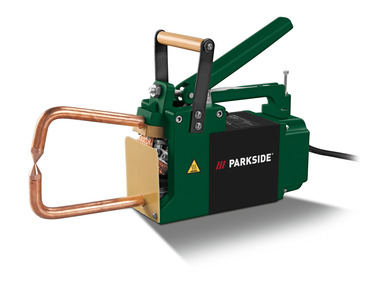
Parkside Spot Welder
Punktschweißzange »PPSZ 700 A1«
Available alternatives
Price history
🇩🇪 DE · Product: lowest €149.00, highest €149.00, last recorded €149.00.
Recorded prices
| Date | Country / version | Price |
|---|---|---|
| 🇩🇪 DE · Product | €149.00 | |
| 🇩🇪 DE · Product | €149.00 | |
| 🇩🇪 DE · Product | €149.00 | |
| 🇩🇪 DE · Product | €149.00 | |
| 🇩🇪 DE · Product | €149.00 | |
| 🇩🇪 DE · Product | €149.00 | |
| 🇩🇪 DE · Product | €149.00 | |
| 🇩🇪 DE · Product | €149.00 | |
| 🇩🇪 DE · Product | €149.00 | |
| 🇩🇪 DE · Product | €149.00 | |
| 🇩🇪 DE · Product | €149.00 | |
| 🇩🇪 DE · Product | €149.00 | |
| 🇩🇪 DE · Product | €149.00 | |
| 🇩🇪 DE · Product | €149.00 | |
| 🇩🇪 DE · Product | €149.00 | |
| 🇩🇪 DE · Product | €149.00 |
Product details
| Type | Spot welder |
|---|---|
| Welding method | Spot welding |
| Welding current | max. 6500 A |
| Material thickness | Max. 1.5 + 1.5 mm |
| Power | 1.70 kVA / S50: 2.4 kVA |
| Voltage | 230 V ~ |
| Protection type | IP20 |
| Accessories | 4 electrodes |
| Material | Aluminum, metal |
| Dimensions | L 41 x W 9.5 x H 24 cm |
| Weight | 12 kg |
Features
- Provides stable connections between two metal sheets.
- Ensures precise and uniform spot welding via high-quality electrodes.
- Robust powder-coated metal housing with a sturdy handle.
- Suitable for sheet steel (e.g., structural steel up to 1.5 mm) and stainless steel.
- Includes a practical lever for compressing the electrodes.
- Simple setup, operation, and maintenance.
- Compact design suitable for mobile use.
- Compatible with electrodes featuring M8 threads.
- Replaceable electrodes.
Important Notes
Always follow the safety instructions provided in the manual. This Class A welding equipment is not intended for use in residential areas where power is supplied by a public low-voltage grid. Electromagnetic compatibility may be difficult to ensure in these areas due to conducted and radiated interference.